Religion & Art + the subjective
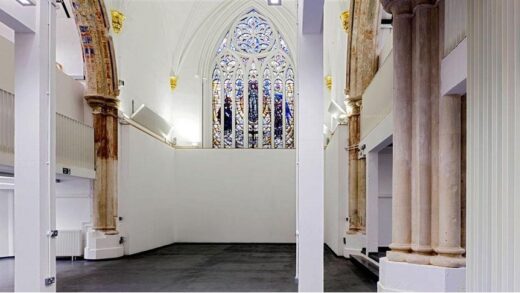
Religion & Art + the subjective was a two-day public event at Goldsmiths College, London, on Friday 13 & Saturday 14 March 2026, with performances, projections, conversations and installations from:
Barbie AI / Noa Amson / Helen Blejerman / Elena Botts / Maya Brachfeld / Lucille Brownrigg / Teresa Calonje & Dominic White / CillaVee / aly,willamina cutler-gear / Nina Danino / Mark Dean / Susan Francis / Daniel Thomas Freeman & Ashling McCann / Rachel Garfield / Guiguisuisui 鬼鬼祟祟 / Ryan Hooper / e.g. King / David Leal / Christian Molenaar / Linda Mary Montano / Mimi Nicholson / Grace Papineau-Couture / John Rogers / SACRA / Holly Slingsby / Aryavandana-Caroline Smith / Danni Stewart / Lili Süper / Nina Trigo / Ilya Utekhin / Jess Wood
For video documentation please visit religionandart.org/the-subjective
Barbie AI’s ‘Humility’ is an interactive sound/art performance piece where audience members are invited to participate in the ritual of the washing of feet. In reverence, and of course with only consenting participators, the feet of audience members will be placed in a wash bin outfitted with piezoelectric pickups. Piezoelectric signal creates sound via vibration and activation of piezo crystals; washing the ‘disciple’s’ feet, and disturbing the water in tandem with the motion of hands, will create a chorus of noisy signal and sporadic sound. ‘Humility’ embraces the destruction of ego and illuminates the symbolism of servant leadership, calling upon the timeless phrase: “the meek shall inherit the earth”. Alongside the emergent and radical nature of sound generation in the piece, the audience has a direct connection to the work as it is being performed, creating communal atmosphere by means of surrendering of ego and bowing to the beauty that is congregation.
Barbie AI is a performance artist and improvised electronic-noise producer.
Noa Amson has been thinking about guilt a lot. ‘What makes something a sin? A young woman sits in a church, alone and guilty, or so she thought. Beginning with the unraveling and recounting from when this guilt began, she descends into a spiritual psychosis. Russians, Victor Hugo, God, her mother, and a past mania flit in and out of her consciousness. A film which treads in the murky waters of our inner worlds– being unable to discriminate between the real and the imagined, the sane and the psychotic.
Noa Amson’s work has spanned audio, still and moving image, the written word, and performance. with inspiration from Antonia White’s ‘Beyond The Glass’, the film explores themes of spirituality, experiences of consciousness, and normal/abnormal perceptions of the self in our individual and collective realities. originally written as a short story, she developed the piece into a screenplay which was later shot and edited into a film with the help of her dear collaborators Elena Botts, Rory Spencer, Ella Kohn, Noam Ackerman, and Yarden Yahal.
Helen Blejerman’s ‘Areas of Search’ is a 16-minute conceptual and poetic science fiction film set in an alternative world. The story follows a woman’s soul searching for her remains in her surreal, fractured town, where it seems that all women have been murdered. We hear her voice, but we do not see her body, as the work explores questions such as what happens to a town when the victims’ bodies are not found, and burial rituals cannot take place.
Helen Blejerman is a Mexican artist based in the UK. She works across various media, exploring the religious aspects of families affected by femicide and the nature of clandestine burial sites connected to the soil and landscape where they search for their daughters. She is an associate lecturer in the Fine Art Department at Sheffield Hallam University, where she is also undertaking a practice-based PhD. Her films have won awards at the Asolo Art Film Festival in Italy, the Berlin Indie Film Festival, and the Cine Paris Film Festival, among others.
Elena Botts is dreaming of other worlds that are the same as ours, as if the spirit is in fact inherent to the trees and the river and mountainside. This short video is a consideration of this awe put to language inspired by a lineage of Tarkovskian musings that occurred whilst underwater and poetry of the New York School which have inspired other feature length narrative films and a six hundred video archive of glitched sound art, moving image, poetry and maps, concurrent with a half dozen poetry manuscripts and one prose (with several imaginary siblings gone missing in it). The story in the poem, like many stories, is both true to life and utterly false, and so, like the knowledge of that still winter morning, is like- thought, but not: an awakening that emerges in place because of, not in spite of, its everlasting subjectivities. As if empires of thought might be submerged back into their pastures like a humanity undiminished, by remembering as illumination through the trauma of being. Like the Buddhist not-self coloured by Simone Weil’s decreation, any wound opens such that the whole world might come into existence. Just as anything, and even nothing, might not be named, still the act of listening still carries meaning, or even, a divinity beyond what had been ever conferred upon it.
Elena Botts is an artist and researcher at Essex, BA from Bard, MFA from Goddard, who organizes a project loosely termed ‘unknown sound collective’ intended as an archive of experimental artists’ interior worlds, these that are externalized through their work, the interchange through artist communities around the world, and the social change this may or may not represent.
youtube.com/@un-known-sound-collective
Maya Brachfeld’s video sequence ‘insufferable/rare honor/noself, em/where is here/placevid72, dreamt someone was holding me tightly by the ribcage 4’ is made from original video footage, field and synthesizer recordings, screenshots and recordings of still images and digital art works, and collaborative dance pieces. ‘The techniques of layering, transparency, distortion, and blending used in all the works create a sense of indirectness/disorientation/fragmentation, which is my attempt to describe (and to accept) the impossibility of complete understanding or perception of existence, even more so as experienced by another. I chose subject matter evocative to me personally of a specific time/place/feeling which may be shared or recognized by others but it is recorded and translated from my perspective, and the material is often manipulated several times over and re-inserted into the work, and so the act of recording/play-back accentuates the layers of subjectivity. The collaborative dance elements are a meta exploration of the body as both subject and medium through intuitive and pedestrian movement in a shared space as an ongoing negotiation and conceptualization of self and other. The use of digital tools and methods of delivery highlight digital media’s impact on contemporary ontologies, delving into new realms for both individual and collective meaning and experience.’
Maya Brachfeld is an interdisciplinary artist whose work spans image, video, sound, sculpture, and immersive installation in a variety of physical and digital media. She works by day as a bench jeweler and production coordinator for a small business in New York’s Hudson River valley.
sites.google.com/view/maya-brachfeld-portfolio
Lucille Brownrigg’s ‘Pitch’ is part of an ongoing project named MOUTH MUSICS, which creatively researches bio-social-cultural-psycho-spiritual approaches to the “creative mind” passages of breath/voice and the “soul.” ‘My research expands the biological self into the ecologically made environment through song and resonance. Working alongside the theosophical writings of Hildegard von Bingen and contemporary scholar Julia Kristeva, I look at the connected realms of melancholia and melody, exploring how speech, lingual materialisation, and choral song operate in altering states and connecting one to an unknown self — a wider spiritual framework, plural self, and environment. This work puts into practice a critical understanding of melancholia — the possessor of the soul — that takes hold of the inner ear and the inner eye, the inner lung, the sealed heart. And develops voice work that follows von Bingen’s scripture for the contemporary moment.’
Lucille Brownrigg (MA, Goldsmiths, Department of Visual Cultures) is a research-based artist working within the discipline of medical histories of the soul, expanding psychoanalysis, spirituality, and practices of the creative health sector. He/She is particularly drawn to the phenomenon of resonance and the medicinal aspects of the voice within expression and song-making at the crossing of species and space time.
Dr. Teresa Calonje and Revd Dr. Dominic White will be in conversation ‘On the controversy of the body’. In an attempt to continue with a conversation started during the Religion & Art Colab in June 2025, Calonje invites monk and theologian Revd Dr Dominic White to discuss our fascination with the female mystics, the controversy of the body, the apophatic and the experience of union understood in mystical theology.
Dr. Teresa Calonje is a researcher and curator with a particular interest in questions of the body and its multiple forms of appropriation. In 2014, she edited Live Forever: Collecting Live Art (Koenig Books). In 2024, she earned her PhD from Goldsmiths, University of London, with a dissertation on how performance art’s bodily gestures have come to be legally owned and sold on a market. She focused her research on artists La Ribot, Tino Seghal and Luisa Nóbrega. Her current research concentrates on the influence of Christian mystics on contemporary performance practices. She has collaborated with Religion & Art in 2020 with a sung piece to the thinker Simone Weil and in 2025 with a symposium on Christian mysticism and the apophatic in performance art with guests Dr. Nina Danino, Dr. Louise Nelstrop and Elena Unger.
Revd Dr. Dominic White is Prior of Blackfriars, Oxford, and Director of the new Centre for Theology and the Arts at Blackfriars Hall as well as a Research Fellow of the Margaret Beaufort Institute of Theology, Cambridge. He met the Dominicans through being organist and choir director of St Dominic’s Priory, London. Fr Dominic is the author of The Lost Knowledge of Christ: Christian Cosmology, Contemporary Spiritualities and the Arts (Liturgical Press, 2015) and How Do I Look? Theology in the Age of the Selfie (SCM, 2020). He is a composer, and co-founder, with Julienne Maclean, of the Friends of Sophia group.
bfriars.ox.ac.uk/research/theology-and-arts/
friendsofsophia.com
soundcloud.com/dominic-white-637066486
dominic.whiteATbfriars.ox.ac.uk
CillaVee’s Light Body / Shadow Body was originally created as an audience interactive durational performance installation for Emersions production company in Asheville NC USA – December 2017. ‘Acting Like Humans’ was an immersive environment of about twenty simultaneously running performance installations that audience members could visit and interact with. The premise of ‘Acting Like Humans’ was an experiment to program a group of Robots with the artificial intelligence to understand the human experience. Each Robot had a specific human scenario to enact. ‘I was deeply exploring concepts of light and shadow at the time and decided to push this idea to the most extreme human dilemma for my Robot’s subjective “human experience”:
The dilemma of the soul arriving in purgatory after death.
The subjective experience of the ultimate choice.
Caught between the shadow and the light.
Has life prepared the soul for light or darkness?
Both feel too extreme, unbearable.
Light so intense, so bright, so blinding.
Shadow so dark, so cold, so desolate.
Yet the periphery of each offers an attractive invitation.
Light is warm and open.
Shadow is cool and mysterious.
To remain in the temporary realm of purgatory is impossible.
A choice must be made.
My performance for ‘Acting Like Humans’ was installed inside a storage closet and completely dark. My role as the Human Robot was objectified by the voyeuristic and manipulative role I gave to the audience. The Human Robot as object was viewed through ‘peep holes’ in a screen and became subject to the light and shadow manipulations of the viewer. Audience members were offered flashlights and materials with which to create light and shadow play within the environment and onto the ‘naked soul’ in purgatory. Through this mise en scene, the Robot’s artificial intelligence was programmed with the subjective human experience of the ultimate choice of the soul – to be made under pressure and confusion – between an eternity of shadow or light. Throughout the duration the vocal soundtrack was on a continuous loop. In this version, the original subject / object role of the audience member is flipped around. Now you, dear audience member, experience the voice inside your own head as if it is your own thoughts. You take on the subjective experience of the soul in purgatory tormented with the dilemma of choice between the shadow and the light. Yet, due to the ‘robotic’ affectations on the voice in the recording, there is a twist to your empathy – because you are experiencing the programming of a Robot to understand a human experience!’
CillaVee (Claire Elizabeth Barratt) is a British interdisciplinary performing artist based in the USA. She is the director of international arts organization CillaVee Life Arts, established Bronx NY 2002, and has run The Center for Connection + Collaboration from her home in Asheville, NC since 2020. She has received a number of awards, including project sponsorship from JP Morgan Chase, NYSCA and the NEA. She served an apprenticeship with the Isadora Duncan Dance Foundation and holds an MFA in Creative Practice from the Transart Institute for Creative Research with Plymouth University where she developed the Living Art performance pedagogy. She was a Co-Founder and Director for Circle Modern Dance and a Choreographer for the Knoxville Opera Company in Tennessee and performed as a dancer with Asheville Contemporary Dance Theater and for Unto These Hills outdoor drama on the Cherokee Indian reservation in North Carolina. Claire has presented work through organizations such as Jacob’s Pillow Dance Festival, Bronx Council on the Arts, Black Mountain College Museum + Art Center and Art Basel Miami, as well as continuing as a member and facilitator with the international Sacred Dance Guild since 1997 – becoming a Legacy Project approved facilitator in 2024. She has performed and taught throughout the USA and in Canada, Europe, Japan and the Middle East.
aly,willamina cutler-gear ‘made software to stage a duet between myself & the men who wroteThe Philosophical Transactions of the Royal Society (1665-1669)(the first peer reviewed English language academic journal). Using corpus linguistics, statistical linguistics, & locally hosted explainable Natural Language ProcessingI have created a kinetic textual ecology that refigures early British Enlightenment Era pseudo-objectivities into subjectivities. My intention behind designing this refigurative system is to mine, aggregate, distill, and surface the biases & desires of a small elite group of men whose correspondences are a significant portion of the substrate of peer review and are foundational to: 1. British coloniality 1600s onwards & 2. deliberately biased psuedo-objective data in contemporary journal based knowledge production activities meant to uphold systems of inequity & harm. Each of the triplets in my software is based around a keyword along with its 5n5 context window. The keywords are as follows: animal, because, big, blood-bloud, body, brain, consid, contrary, creatur, cut, discover, distance, earth, either, equa, experiment, fire, force, good, great, hath, having, ingenious, instrument, land, large, little, majest, make, men, motion, natur, observ, people, person, princip, queen-king-majest, reason, salt, sea, season, see, small, spirit, subject, think-thought, thus, time, tryal, vein, water, whether, women.’
aly,willamina cutler-gear designs countertechnological systems that engineer machinings of polyontologically-oriented crossdisciplinary theory to create procedural kinetic environments that stage material action between situated bodies of data&more-than-data-bodies. She curates personality-rich-datasets & otherwise conglomerative entities via a mixed methods approach combining corpus linguistics, statistical analysis, poetics, ecological thinking, heterogeneous information warehousing, & computation. She fabricates articulations of this research via a compositional praxis operative between text, sound, physicality, spatiality, improvisation, & handmade software+hardware. Her work lives within & between the following frames: 1. Shetland 2. Bodies 3a. Inscription 3b. Interfaces 3c. Information & data. She has shared her projects in contexts such as Market Gallery (Glasgow) & International Noise Conference (Miami). She has an MLitt(distinction) in Art Writing from The Glasgow School of Art (2023-2025), a BFA in Socially Engaged Art from Goddard College (2019-2022), & undertook fully funded studies in chamber music & multimedia composition + visual art as a Brockway Faculty Scholar at Bennington College (2011-2014).
Nina Danino will be trying out a short extract of ‘Vision Seven; Sed Diabolus’ a music project in development on Hildegard of Bingen in a recital accompanied by electric guitar. Vision Seven is also the title of her band project. Accompanied by the guitarist of Guiguisuisui noise in a short extract rehearsal of reading and recital from the visions of the devil of Hildegard of Bingen. ninadanino.co.uk’
Dr Nina Danino is Reader in Fine Art, Goldsmiths, University of London. She has made experimental and feature films including Stabat Mater (1990) and Now I Am Yours (1992). Temenos (1998), a feature film on sacred landscapes, is published by the British Film Institute in History of the Avant Garde (2004). Nina Danino’s fifth and most recent feature film is MARIA (2023) on the transfiguration of the opera singer Maria Callas. Her most recent live work is a short recital with organ XXXI. The Night-Song for Deptford X (2025). Her most recent publication is Experimental Film and the Subjective at the London Filmmakers’ Co-op—a series of conversations with women filmmakers by Nina Danino published and accessible online by Lux (2025).
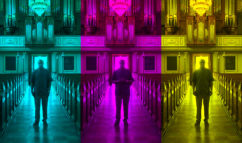
Mark Dean’s ‘Promenade’ combines footage of Myra Hess performing her transcription of JS Bach’s ‘Jesu Joy of Man’s Desiring’ (popularised through her National Gallery wartime concerts) with Cissy Spacek’s post-apocalyptic journey in ‘Carrie’.
Mark Dean has made video and sound art in the form of pastiche film since the 1990’s, with works held in the collections of Arts Council England, Leeds Art Gallery, MUDAM Luxembourg and EMMA Finland. He currently serves as chaplain to University of the Arts London and coordinates Arts Chaplaincy Projects.
Susan Francis’ installation ‘He Loves Me, He Loves Me Not’ forms part of the PhD practice-based project Walking Through Walls, and contributes to a body of research into disengagement, materiality and re-enchantment in the 21st century house. It is, in essence, a rather clunky, tongue-in-cheek device for discerning truths. Inspired by Gideon’s fleece in Judges chapter 6, it echoes Gideon’s somewhat questionable and very human attempts to communicate with God through the laying down of a fleece. Here the fleece is a rug or throw from a comfortable interior, laid on foam playmats that form a modular fake version of a grass lawn. Anchored by a copy of the mystic Evelyn Underhill’s ‘The House of the Soul’, tethered helium filled balloons float on ribbons above, performing a reinterpretation of the game, ‘He loves me, He loves me not.’ ‘Effeuiller la Marguerite’ as it’s originally known, is essentially a game of divination to find one’s true love. In this reinterpretation however, inspired by Gideon’s example, it demonstrates the fragility of faith through our somewhat feeble and absurd attempts at communication with the Divine. The balloons are allowed to fall over time onto the fleece, thus determining the outcome. How that outcome is read is up to the viewer and conveniently, can be interpreted in whatever way provides the desired answer. The piece itself is a riff on the use of questions in mystical traditions, in particular the Zen koan, to find a sense of insight into the nature of mind/reality, and the crossover with improvisation techniques in the arts such as within music and acting.
Susan Francis is a Belfast-born artist now living and working in Wiltshire. Her practice focuses largely on video, sculpture and installation. Past international exhibitions and residencies include The Polish Sculpture Centre in Orońsko , Poland, The Bemis Center for Contemporary Arts in Nebraska, USA and Atelier Circulaire in Montreal, Canada. Having recently completed a master’s degree in Theology, Imagination and Culture at Sarum College, Salisbury in 2022, Susan Francis is currently studying a practice based PhD at Winchester School of Art, through The University of Southampton. Her work is held in public and private collections in the UK and North America, and in the collection of the Arts Council Collection of Northern Ireland. She is currently a member of the Royal Society of Sculptors.
Daniel Thomas Freeman’s ‘Listening in the Dark [excerpt]’ presented here in collaboration with Ashling McCann is ‘an audio recording from a sound meditation which I lead recently in three secular and faith contexts. The piece is part of the long-term project Strange Weather Documents where I hand-make imaginings of the future sound of nature using analogue and digital synthesizer electronics. These mimickings suggest birdsong, wind, burrowing, bubbling, fluttering, mammalian grunts, insect choirs, earth tremors beneath our feet and whale song in the deep. Interspersed with the narration of selected relevant texts, these sessions are designed to guide audiences towards collectively expanding their empathic connection with the more-than-human: with nature as a response to and lament of climate change, and with the divine as a reach into visions of existence beyond the self and beyond the damage inflicted by isolation, conflict and late-stage capitalism. Sound references include Éliane Radigue’s long-form, slow-change electronics in Trilogie de la Mort (1998), Maryanne Amacher’s intensely physical Sound Characters 2: Making Sonic Spaces (2008), the visceral tectonics of Mika Vainio’s Lydspor One & Two (2018) and Chris Watson’s seminal field recordings in Weather Report (2003). Text references include the dystopian writings of J. G. Ballard (The Disaster Area, 1967), Brian McLaren’s Life After Doom (2024), and Heidi Hart’s Climate Thanatology (2022).’ Ashling McCann is drawn to collaborate with Daniel Freeman through a shared faith and interest in how we experience and navigate the world, our human striving and need for reflection and stillness.
Daniel Thomas Freeman is an artist working at the edges of sound, music and film. He is currently a postgraduate researcher in Sound Arts at University of the Arts London where he creates imaginings of the future sound of nature. Over the last 25 years he has become more and more interested in frequencies, textures, slow change art, less-bound structures, spirituality and investigations into the alchemical nature of sound.
descendingangel.com
instagram.com/danielthomasfreeman
Ashling McCann is a contemporary dance artist and physical theatre practitioner based in London. Originally from Bristol, she trained with Springs Dance Company and at Bird College before completing a BA (Hons) in Contemporary Dance at Newcastle College. Ashling has performed with Surface Area Dance Theatre, Worldbeaters Music, Meta4 Dance Company and FertileGround among others. Much of her work explores the interplay between sound and movement which has been developed through a Creative Summer Residency at Dance City, and a CreativeUK Residency at The Old School Gallery, Alnmouth. Ashling is continuing her research at LCC, currently undertaking a Sound Arts MA.
Rachel Garfield’s film ‘Glimpse’ works with bricolage, found and shot footage and interviews to explore the subjectivity of the Irish Catholic community in Liverpool. The rich colour and dramatic form are brought togethr just as the impressionistic and the specific are juxtaposed to give insights into a community and its relationship with the city that eschews the normal clichés.
Rachel Garfield is an artist and Professor in Fine Art at the Royal College of Art. Recent work has been screened at the ICA in the London Short Film Festival and Hugh Lane Gallery in Dublin. Garfield also exhibits her videos in galleries such as The Whitechapel Gallery, London; The Hatton Gallery, Newcastle; Beaconsfield Gallery Vauxhall, London; Focal Point, CCA Santa Fe; Arizona State University Museum; Aqua Art Fair, Miami.
Guiguisuisui 鬼鬼祟祟 is a project born in China by a British artist, combining heavy rock and psychedelic music with Buddhist and Taoist influences, whilst taking influence from minority folk operas in China. The aim is to bring meditative transcendence into a “rock” performance; a sound and performance that is for the self and for the collective, much like meditation in Buddhist traditions. The intent is to approach the boundaries that might separate these different elements with a playfulness, and arrange them in a liminal space — betwixt and between — where the normal can be temporarily inverted to allow for alternate experiences and perspectives to take root and bloom. A defining point of the half life of Guiguisuisui has been an exploration into how music is not a universally coherent construction. What is considered music and what is considered noise is subjective and culturally constructed, much in the same way that the grotesque and the beautiful are equally subjective when examined cross culturally through the lens of philosophy, theology, linguistics, and anthropology. Another key question is that of when we make music, who is this act of making (or manipulating) for? Is the player’s role merely to entertain an audience and meet their expectations based on social constructions of what a performance should consist of? If on the other hand the performer only arranges sounds for themselves why should this be a public act and does it have any place in the public sphere? Should music and art tease at the subjective and invisible boundaries between these two extremes, giving the audience something they may enjoy or benefit from, but perhaps not in a manner they might expect? This is an ongoing debate; however it appears evident that much like language, music is a domain that is socially constructed and constructed in a social sphere. Therefore if sounds are manipulated and arranged in a social context does that allow the label of music to be applied?
Guiguisuisui 鬼鬼祟祟 is a phurba psych band which draws on Himalayan spirits to shake hearts and minds in order to awaken the senses. The most recent iteration is a duo that blends doom metal and psych rock to create sonic tapestries inspired by Himalayan lore, Chinese folk opera, and sci-fi fantasies, where heroes and great cities are birthed and destroyed between each note, and fabled adventurers scale the swells and crescendos surrendering their worldly senses in order to seek greater truths from beyond this mortal plane.
Ryan Hooper’s ‘margins of unfinished self’ is a work that explores the shifting boundaries of the self. It draws on micro narratives and sonic fragments that move through grief’s reshaping of time and identity – moments where scepticism sits alongside yearning, where the mystical brushes up against the everyday, and where multiplicity begins to feel like a condition of being. It’s interested in the openness of becoming a future self that hasn’t quite arrived. The work layers voice, ambient textures, field recordings – including material captured inside a cathedral while it was under renovation – and tape manipulations. The tape recorder becomes both witness and accomplice; it promises to capture truth while at the same time producing its own distortions. Hiss, warble and degradation mirror the instability of memory and the continual rewriting of the self. Lo-fi visual textures of grain, distortion and degradation echo this erosion of pleasure, body and mind, holding fleeting moments of lightness alongside the constant risk of collapse – like a balloon on the verge of bursting. Loops, in both the audio and visual language, are central here. Repetition becomes a way of asking what remains, what changes and what disintegrates; what returns altered, and what cannot return at all. Through looping, fragments accumulate new meanings over time, just as the self is continually revised through experience and relation. The work brings new audio material into conversation with earlier compositions, allowing prior gestures to gather fresh resonance through recontextualisation. The visuals likewise interlace recent imagery with older personal projects and found texts, as though the archive itself were dreaming. Dreams, drifting attention and the lived realities of chronic pain and illness form an undercurrent throughout, raising questions about how the self is constantly negotiated with – and through – others, suggesting that subjectivity is plural, relational and always unfinished. Rather than resolving into a single stable identity, the question ‘Who am I?’ remains deliberately open. In this sense, margins of unfinished self responds to a concern with non-coercive, non-exploitative forms of freedom and solidarity by inviting us to listen for the selves we have been, the selves we have borrowed and the selves we are still becoming.
Ryan Hooper is a Cornwall-based writer, artist and sound maker working across mixed media. His practice explores the intersections of memory and the natural world, reflecting on themes of identity, loss and resilience. He is the author of A Map and Not a Tracing, a deconstructed novel concerned with remembering and forgetting, and the founder of Heavy Cloud Press, through which he has released works integrating collage, sound and text. His work has been published by Broken Sleep Books, Azarao Lit Journal, Winged Moon Magazine, MEANS Magazine, Bad Saturn Media, IceFloe Press and others.
e.g. King‘s ‘what this is’ is a performance exploring the crossover between the use of questions in mystical traditions (particularly the Zen koan) to seek insights into the nature of mind and reality, and improvisation techniques employed within acting and music to create a heightened sense of presence.
e.g. King’s work investigates the tension between the growing use of artistic and contemplative practices for therapeutic ends – in particular improvisation and ideas of “mindful creativity” – and the ways in which these can fall short when framed as solutions to broader sociopolitical issues.
egking.net
instagram.com/egk.ing
David Leal’s videos and object-led installations explore the interior as a space for expressing or unearthing desires, beliefs, and repressed impulses. His work investigates themes of corporeality, community, sexuality, spirituality, and care, often employing confrontation—through the editing of still or moving images or the decontextualisation of objects—to challenge perception and expectation.
David Leal’s work has been presented in exhibitions and screenings at venues and platforms including Lismore Castle Arts (Lismore), Carpintarias de São Lázaro (Lisbon), Ridley Road Project Space (London), DuplexAIR (Lisbon), South London Gallery (London), Firstsite Art Gallery (Colchester), and the Queer Film Festival (Lisbon). He has also given talks at Goldsmiths University (London) and AutoItalia (London). His work has been featured in publications such as Revista Brotéria, Pilot Press, and Electra Magazine. He has previously received grants from DGartes and the Calouste Gulbenkian Foundation, supporting the development of his artistic practice.
Christian Molenaar’s ‘Strophische Gedichten’ attempts to bridge medieval univocity and Deleuzean monism through the visions of the 13th-century mystic Hadewijch of Brabant. ‘In conceptualizing the film, I was inspired to read Hadewijch through the lens of two poet-essayists: Anne Carson, whose “Glass Essay” centers on the writer’s relationship to Emily Brontë, and John Ashbery, whose “Self-Portrait in Convex Mirror” details his response to Parmigianino’s painting of the same name. In both essays, a visionary work of art escapes from its creator’s subjectivity to reach across history and inspire the construction of a new gaze, or as Brontë herself may have put it, a new form of “whaching.” Strophische Gedichten represents my own small attempt to bring to life a centuries-old work, through a dialectic of cinematic form and Hadewijch’s own words in Middle Dutch.’ Further information on this work is available at christianmolenaar.com/strophische-gedichten/
Christian Molenaar is a multi-disciplinary artist from San Diego, CA. His extensive body of work has incorporated film, painting and music, including credits on nearly 200 recordings in a wide variety of styles as well as performances in multiple countries. His work often includes hand-built electronics and instruments to explore the relationship between the personal and the sacred.
Linda Mary Montano’s video ‘My Mother: Artist and Teacher’ ‘IS FOR US AS A COLLABORATION, AS AN OPPORTUNITY TO CONTACT OUR MOTHER HEART OUR FATHER HEART, OUR OWN HEART. SING ALONG, HUM, VIBRATE WITH MOANS, TEARS, LAUGHTER, OR SILENCE! IT’S FREE THERAPY!!! AFTER THE VIDEO WE WILL CELEBRATE OUR PRECIOUS LIFE WITH YOUR VERSION OF THE CHICKEN DANCE. THANK YOU FOR CO PERFORMING. In ART EQUAL LIFE EQUALS LOVE’ Linda Mary Montano. 2026
Linda Mary Montano is a seminal figure in contemporary feminist performance art and her work since the mid 1960s has been critical in the development of video by, for, and about women. Attempting to dissolve the boundaries between art and life, Montano continues to actively explore her art/life through shared experience, role adoption, and intricate life-altering ceremonies, some of which last for seven or more years. Her artwork is starkly autobiographical and often concerned with personal and spiritual transformation. Montano’s influence is wide ranging – she has been featured at museums including The New Museum in New York, MOCA San Francisco and the ICA in London.
Mimi Nicholson’s ‘Birthing Godot’ is a video lasting 6 minutes and 55 seconds. It pairs footage of the artist birthing her son with fragments of the Anglican Eucharistic prayer narrated by her three-year-old daughter.
Mimi Nicholson is a mother of three and an artist living in London. She holds an MPhil in Modern Theology from Oxford and a BA in Fine Art from Goldsmiths. Her work uses limited domestic technology, materials and spaces in order to create performances of self-portraiture, usually in the form of photography or video. She has also worked in set design, installation, writing and painting, both collaboratively and independently. Recently, she has become concerned with the more explicitly theological implications of performance, especially in relation to Marian iconography, the eucharistic body and the act of confession.
Grace Papineau-Couture’s A Body of Objects is a single channel video piece cataloguing handmade instruments and found non-musical sound objects. By weaving together disparate sounds created by each instrument and sound object, A Body of Objects exalts the objecthood of these invented instruments and found items while disrupting ideas of linear listening. Each object has its own agency. Player and instrument work together to create a soundscape that invites listeners to think about sound and object as an encounter as opposed to the sequence they see; the instrument is played but as the video unfolds, it is increasingly difficult to place the action to the sound. The sound is mediated through the listeners’ perception and bodily attention, creating a unique subjective sonic experience that resists the hierarchy of linear compositions placed upon sound and engages in dialectical listening.
Grace Papineau-Couture is a Canadian interdisciplinary artist currently based in Chicago. They are interested in sound as a generative process – something unfolding, recursive and responsive, allowing for sound and listener to have a dialectical relationship. Using old and low-fidelity technology such as cassette tapes, contact microphones and experimental instruments, Grace’s sound performances interface with themes of haunting, environmental disaster and acoustic ecology. These compositions urge the listener to ask themselves, “what do we hear in the latency? What kind of apparition reveals itself to us through the cracks of low fidelity?”
John Rogers‘ talk & reading will explore the tradition of topographical walking and its relationship to psychogeography; the enduring power of place in a shifting landscape and how this influences the human psyche, including insights from his new book seeking some of London’s lesser-known rivers either buried or maligned but which still possess a hold on the imagination.
John Rogers is a writer and filmmaker based in East London. His books include This Other London – adventures in the overlooked city; Welcome to New London – journeys and encounters in the post-Olympic city; and The Black Path. His documentaries include The London Perambulator, and London Overground with Iain Sinclair. His next book will be published by Three Imposters in October 2026.
SACRA’s ‘If I am not for me, you will (be) for me, I will (be) for you – us into us’ is a multi-dimensional performance which draws together aspects from pre-modern Christian mysticisms with contemporary psychoanalysis to explore conceptions of expanded/entangled landscapes of subjectivity.
Hillel the Elder: “If I am not for myself, who will be for me?”
SACRA: “If I am not myself, who will be me? Who will will for me?”
Hillel the Elder: “If I am only for myself, what am I?”
SACRA: “If I am only myself, I am nothing, no-thing, no object, no sole, singular, soul.”
Hillel the Elder: “If I am not for myself, who will be for me? If I am only for myself, what am I? If not now, when?”
SACRA: “If I am not for myself, I am always for you (plural), into you (us). Now. Always. Already.”
In both Christian mystical writings and psychoanalytical theory, we find visions of subjectivity beyond the confines of individual selfhood. This performance uses pre-modern female mystical authors’ images of the soul and their approaches to living/practising these images as a mean to develop an embodied exploration of conceptualisations of the psyche: Teresa of Ávila envisions the soul as a silkworm spinning the cocoon of its own selfhood, weaving from its body the tomb in which it will die and be reborn; Catherine of Siena speaks of the soul as a vine so deeply engrafted into the soul-vines of all its neighbours that it can do no good nor ill without doing the same for those around them. Centuries later, Bracha L. Ettinger conceives of a deep transsubjective and subsubjective psychic layer, a matrixial borderspace that entangles selves through the mental strings of events and encounters. The work follows a montage-based approach on both material and theoretical levels: mystic and psychoanalytic ideas are ‘clashed’, interwoven, and entangled through a combination of embodied performance, projection, sound, and voice. Audience members are invited to step into, speak into, and co-create a psychological landscape of words, sounds, and images which considers what it might feel like to inhabit entangled visions of being.
SACRA is an arts partnership between the artists and practice-based researchers Dr. Laura Dorer (PhD Visual Culture) and Dr. Harri Hudspith (PhD Theology and Religion). Through multi-modal visual, performative, and textual methods, the duo explore clashes and resonances between trauma, medieval mystical practices, psychoanalysis and post/transhumanism to explore visions of new worldviews. SACRA is both a relationship, space, and purpose for working through challenging questions and exploring arts practice as a framework for wonder and care that challenges binaries between self/other, human/more-than, internal/external, past/present/future. We aim to create spaces where audiences encounter vulnerability, interdependence, and care not as private burdens but as shared, relational, ethical conditions. This, we hope, encourages people to think of their experience as sources of interconnection and responsibility, as hopeful caring and being cared for in this knotty mess of being we belong to.
Holly Slingsby’s Holding Shards is a performance to camera video work. It was filmed in a burnt, regrowing woodland in Kent; a desecrated church in Swansea; and a stream in the Gower Peninsula. The work builds on a live performance made in the village of Walsingham, Norfolk (Messenger’s Lament) which examined that place’s history of image-breaking and the pilgrimage of childless believers. The protagonist of both works is a smashed stained-glass saint, who laments unanswered prayer. Holding Shards continues my ongoing experimentation with performative action as a means of revivifying once-sacred or sacred-looking spaces. It draws parallels between iconoclasm and other forms of grief and loss, such as ecological breakdown and infertility. The shattered saint character inhabits the filming locations, and we perceive them via her touch, gestures and attention. In relation to Hillel the Elder’s questions, the work has a solitary quality born from subjective experience. However, it aims to address themes which are not only personal, but broader, pointing to the loss we experience when our worldviews are fragmented or overturned. Using handheld and point of view footage, the work attempts to invite viewers alongside the performer’s interior experience. Holding Shards resides between mourning and hopefulness, pointing to the possibility of healing after loss. Its soundtrack includes church bells which build from melancholy tolling to celebratory crescendo. Plants burst into abandoned places, light breaks into dark spaces, and the possibility of transformation and regeneration is cultivated. The work has previously been screened at Experimentica, Chapter, Cardiff; Ruthin International Arts Festival; the symposium Picturing the Unseen at MAC Birmingham; and the online viewing room of the International Forum of Performance Art, Drama, Greece. It has not previously been presented in London.
Holly Slingsby works in performance, video and painting. Her practice explores belief, and examines representations of women and their implications. Her visual language reflects a fascination with iconography, drawing on biblical imagery, mythologies, and contemporary culture. Much of her recent work seeks to convey lived experience of infertility. Slingsby’s work has been screened, performed and exhibited at MAC Birmingham; Space52, Athens; Chapter, Cardiff; Tate St Ives; Turner Contemporary; CCC Barcelona; LABS Bologna; Matt’s Gallery; Spike Island; Modern Art Oxford; Freud Museum, London; Bòlit, Centre d’Art Contemporani, Girona; Tintype, London; DKUK, London; Art Licks Weekend; ICA, London; and the Barbican. In 2023 she was joint winner of the Exeter Contemporary Open. She is a Lecturer in Fine Art at Swansea College of Art.
hollyslingsby.com
instagram.com/hollyslingsby
Aryavandana / Caroline Smith’s Silent Under Ground: 12 hour meditation (with pause) on the Circle Line is a talk and shared experience of stillness based on a December 1st durational meditation sit on London Underground’s Circle Line. This responds to Hillel the Elder’s three questions, particularly drawing on a quality of nowness (‘If not now, when?’)
Aryavandana / Caroline Smith is a Buddhist Ordained practitioner working as an accredited mindfulness facilitator and meditation teacher at the London Buddhist Centre. Her artistic practice spans many years of performing in galleries and theatres and she has taught on writing and performance for academic institutions (Greenwich University and the Guildhall School of Speech and Drama). She is currently writing her first non-fiction book, and is training as a sound healer.
Danni Stewart’s ‘Pain Re-synthesised’ is a meditation on the subjective nature of pain. Exploring the disorienting, debilitating nature of pain, while also reflecting on its potential to generate something new – to create texture, detail, temporal dimensions, divinity and beauty that didn’t exist before. A process of re-synthesis takes place as a groan is broken up, warped, re-pitched and transformed again and again through SPEAR – a spectral analysis program that visualises sound frequencies as fragmented grey lines. Each line you see is a fragment cut and re-synthesised from the original recording. ‘I chose SPEAR as my medium because it’s an incredibly clunky, frustrating software to use, which I feel has synergy with the Disabled/chronically ill experience of exerting huge amounts of energy to achieve simple tasks. In this way, SPEAR is more than just a software used to re-synthesise a recording of my voice – it’s an embodiment of living with persistent pain.’
Danni Stewart (she/they) is an artist and producer based on Gadigal Land (Sydney, Australia). Their practice explores themes of temporality, nostalgia, climate and critical disability studies. Danni’s work spans sound art, performance and podcasts and has been featured by Transom, ABC, XMTR Festival, fbi.radio, UnionDocs Centre for Documentary Art and elsewhere. With each project they aim to create space for connection, community and deep listening.
Lili Süper’s ‘Fog is coming’ invokes Daisy Hildyard on the Second Body: You are stuck in your body right here, but in a technical way you could be said to be in India and Iraq, you are in the sky causing storms, and you are in the sea herding whales towards the beach. You probably don’t feel your body in those places: it is as if you have two distinct bodies. You have an individual body in which you exist, eat, sleep and go about your day-to-day life. You also have a second body which has an impact on foreign countries and on whales. ‘I am exploring the heaviness of the Second Body. What it means to be in the middle of everything, to be all over the place and to be complicit. From the outset, it seemed peculiar to me to be constantly on aeroplanes during my Art and Ecology studies, during which I have been scrutinising the global technologies of mapping and extracting our planetary body. The take-off into the upper atmosphere and the international repositioning of our bodies for the purpose of knowledge accumulation by artists and academics replicates tropes of theoretical abstraction, what Donna Haraway calls the ‘god trick of seeing everything from nowhere’. In the second body, we carry the impact of everything we have caused on this planet. The modern architecture of the airport aims to control bodies in motion through the denial of location. The spatial channeling of consumerism functions as distraction from the immense environmental damage caused by kerosene. I carried a silicone doll through the terminals, and it was harder than I had expected. I was sweating and nervous. I still had back pain two weeks after the flight. The metaphor has become a heavy one. Sometimes I would like to overcome my body. To get rid of pain and of everything it is responsible for. And still, I want to believe in the body. It is our access to the world itself, and through it we are in contact and located. I like its porous boundary. If we stopped trying to rise above its limits, we might lose the view from above, but we would sink deeper into being part of the world.’
Lili Süper is a multimedia artist working between London and Hamburg. In staged installations, video works and performances, she probes ecological, corporeal and political tipping points. Her deliberately ambiguous and uncanny visual language captures the zeitgeist of today’s hypercultures. In 2018, Süper co-founded f.e.t.t. kollektiv, an interdisciplinary performance network. She studied at the University of Fine Arts Hamburg (HFBK) and in the Art and Ecology program at Goldsmiths, University of London, supported by scholarships from the DAAD and the German Academic Scholarship Foundation. She has shown her work in venues ranging from commercial galleries to squatted factories, performance festivals and municipal theatres. Süper received the HISCOX Art Prize in 2022 and was nominated for the German Federal Prize for Art Students in 2023. Residency and exhibition invitations have brought her work to international audiences.
Nina Trigo will invite audience members, one after the other, to take ‘Un Matecito’ with her in 3D printed ceramic cups. In this intimate setting, the audience activates a branching narrative that envisions an alternative history for the coca leaf, exploring how its preservation can reshape indigenous futures. Nina grounds her research in Edouard Glissant’s ‘Right to Opacity’. She aims to respect and restore indigenous knowledge while envisioning transformative futures, reclaiming the sacred and cultural vitality of the coca leaf within a decolonized tomorrow.
Nina Trigo is a French Bolivian multidisciplinary artist whose practice integrates performance, text, 3D printing, and video. Through these diverse mediums, she explores the ambiguities of dual identity, the reclaiming of indigenous narratives within modernity, and the dismantling of colonial legacies.
Ilya Utekhin’s Meditation Machine belongs to a series of virtual interactive musical instruments. Sound is produced as a result of a physical simulation that can be either partly controlled by performer, or be fully automatic. The music is linked to a visualisation of floating and colliding balls that sing at a collision between them and with borders. In Auto mode, the tool generates an infinite music series based on random activation of the launch of the balls. Floating movement together with singing bowls present a reflection on trance-inducing capability of sights and sounds.
Ilya Utekhin (b.1968) is social and cultural anthropologist, formerly Professor of the Department of Anthropology, European University at Saint-Petersburg, Russia. Currently he is Professor of Russian and Balkan Studies, Aarhus University, Denmark. His research interests include visual and medical anthropology, study of communicative interaction, and analysis of censorship based on data. Working on interdisciplinary projects, Ilya Utekhin has been active in digital humanities, film and digital art.
Jess Wood’s exhibition and talk ‘Experiencing sanctuary in the Here-and-Now’ is based on her PhD at King’s College London, awarded 2026. ‘In my thesis, I explore how contemporary arts practice can be used as an exegetical tool in reading selected stories in the Hebrew Bible, one of which concerns our experience of the divine presence in the sanctuary. I make several series of ceramics and miniature paintings on paper and vellum to bring to life these stories in abstract and calligraphic form. One of my themes was how to make contemporary micro-sanctuaries, that is, small objects through which the viewer might be jolted into a sense of a presence in the subjective here-and-now act of experiencing the work. Each of these works is based on an element in the story of the sanctuary (Tabernacle and Temple) in the Hebrew Bible. In this talk, I present a discussion of how the artworks are rooted in biblical understandings of what a sanctuary is (a place of intersection between heaven and earth, and a house for the name of God), and how we can experience this in our reception of the work.’
Jess Wood has recently been awarded her PhD from King’s College, London which asked how arts practice as research could contribute to biblical exegesis. For two years prior to her time at King’s, she was a student the King’s School of Traditional Arts in London, where she studied the techniques of Islamic and Christian traditional arts (such as tile-making, illuminated miniatures, and icon painting). In her thesis, she used ceramics and manuscript painting to make series of small and miniature artworks which engaged directly with selected stories in the Hebrew Bible (including the creation story, Jacob’s ladder, Moses and the burning bush, and the construction of the Tabernacle). She put emphasis on the importance of the hand-made materials with which she worked, and the correlation between the pigments and their qualities (such as cinnabar and lapis lazuli), and the concepts of ‘presence’ revealed in the stories. Unlike most manuscript painters, while she worked with calligraphy, she also use abstraction as a means of exploration and expression. Prior to this, she worked as an artist for several decades, and taught art and theology at Winchester University. She was awarded her MBE in 2012 for services to youth work.